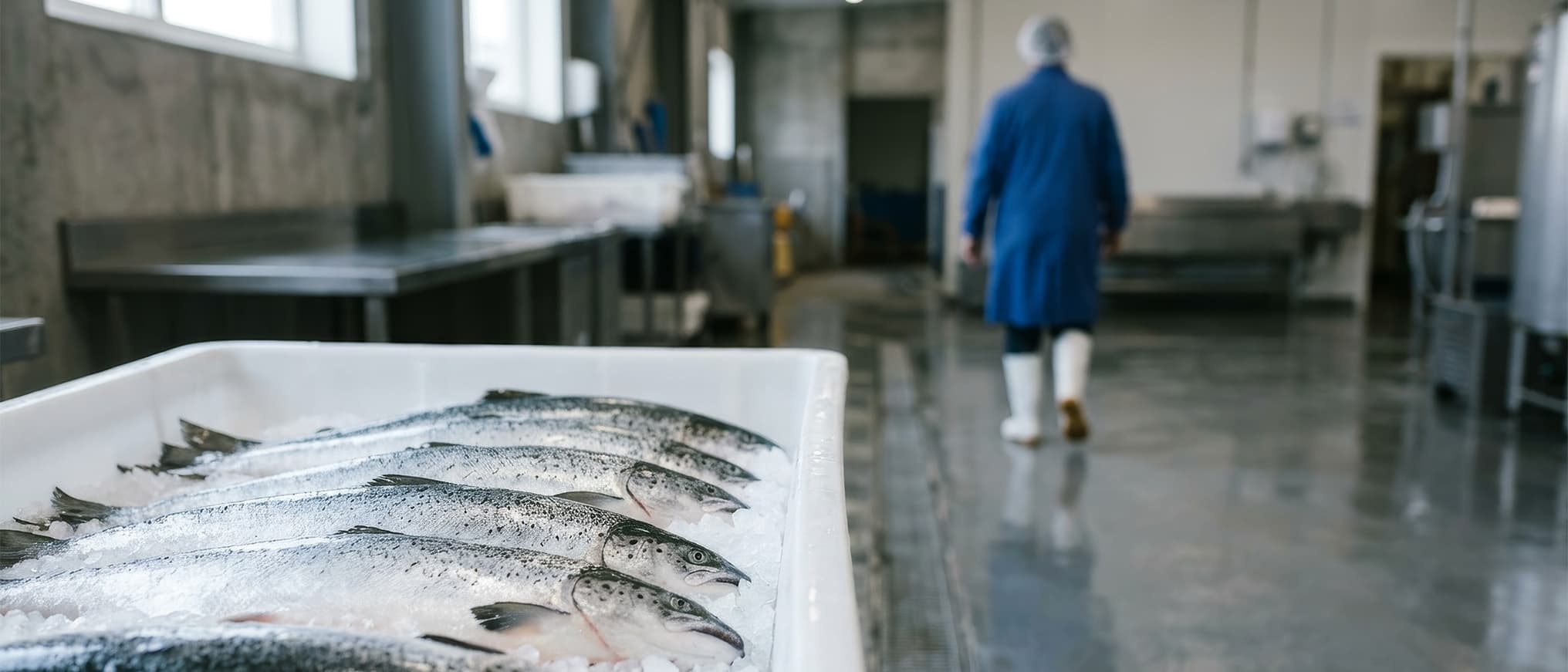
Upcycle the value that aquaculture leaves on the table.
Farmed-fish operations create more processing waste, more sludge and more mortality material than ever before - and every tonne of it has recoverable value. We build the processing systems that turn those streams into meal, oil, energy and compliant outputs.
Talk to an aquaculture specialistAquaculture is on track to be roughly half of the world's fish supply.
Marine aquaculture is projected to more than double by 2050 - from around 30 million tonnes today to roughly 74 million. As volumes climb, so do the operational pressures that come with them: tighter water and waste regulation, scarcer labour, higher energy costs, more scrutiny on biosecurity and traceability.
The plants that handle this growth well aren't the ones with the biggest single line — they're the ones that can adapt as the species mix, capacity and rule set change underneath them.
Four jobs the processing line has to do well.
Recover protein and oil from processing streams
Turn trimmings, viscera, frames and other by-products into meal and oil instead of cost-to-dispose waste.
Dry aquaculture sludge into a usable solid
Continuous, energy-efficient drying that reduces volume, kills pathogens and produces a stable output for energy, fertiliser or further upcycling.
Handle non-viable and mortality fish responsibly
Hygienic, biosecure rendering that meets regional regulatory standards and converts material into recovered fats, proteins and minerals.
Cut odour and effluent at source
Integrated condensing, scrubbing and treatment so the process sits comfortably alongside its surroundings — and stays inside permit limits.
Built to grow with your operation, not against it.
Right-sized for where you are now
Start with the capacity and process steps you actually need today — without painting yourself into a corner when volumes grow.
Modular so you can add as the operation scales
Each block (cooking, separation, drying, evaporation, treatment) can be added or swapped without rebuilding the line around it.
Engineered for changing inputs
Farmed species, mortality rates and processing yields shift over time. The equipment is configured so it doesn't lock you into one feedstock profile.
A plant that runs every day, year after year — not just at commissioning.
The plant we install is one part of the relationship. Service planning, spare parts strategy, upgrades, training and remote support are how it stays productive over its working life.
Let's talk about your stream.
Whether you're scoping a greenfield site, adding a sludge dryer to an existing facility, or trying to make sense of a mortality-handling problem — we can help you size the right solution.